Posts

Local Law 97, New York Mandates a Greener State

Image
  The Climate Mobilization Act, NYC Local Law 97 (LL97) became law in May 2019. This environmental law mandates reductions in carbon emissions from buildings in New York City starting in 2024. It also adds a requirement to report annually on a building’s carbon emissions. This new law covers both new and existing commercial buildings larger than 25,000 square feet, or groups of two or more buildings with a total area of more than 50,000 square feet if they are under the same tax lot or part of the same condominium project. The carbon emission targets vary based on the occupancy class of the building and are calculated by the square footage of the building. These building carbon emission targets are going to decrease over time in two stages. The first stage, from 2024 to 2029 has been set based on annual energy benchmarking data to affect only the top 20% of carbon emitters. The second stage, from 2030 to 2034, reduces the emissions caps to impact 75% of all buildings. Unlike pr...


Why Roll the Dice with Water Safety?

Image
  There are gamblers out there who will bet on almost anything, cards, horses, dogs, you name it. But so far, we’ve never heard of a bookmaker giving odds on the safety of the water supply in a commercial domestic hot water system. Some property managers, on the other hand, either deliberately or inadvertently, are all in on that bet. They are betting that they can save a little money by not installing a 3-way domestic tempering valve, and still deliver hot water at the right temperature that is bacteria-free. They seem to gladly take that bet if it saves them some money in the short term. Unfortunately, if the bet goes bad, they stand to lose a lot more than if they had invested in a 3-way domestic tempering valve. Here is the bet that some property managers take. Most local and national plumbing codes require that the maximum temperature delivered to the hot water tap cannot exceed 120° F. This safety rule is in place because a water temperature of 125°F can scald an adult ...

Get Cozy with One Heating Control Supplier – Heat-Timer®

Image
  In many organizations, it’s common practice for IT to standardize equipment. It might seem that this policy only benefits IT, but everyone in the organization wins. By doing this, technicians only need to learn to configure and troubleshoot one type of system, over time familiarizing themselves and improving service. When there is only one supplier, it reduces compatibility problems that leave two suppliers pointing fingers at each other, while the technician and users are left without a solution. Similarly, large manufacturers will specify the same brand of equipment in all factories worldwide. A technician can walk into a factory in Shanghai, Tennessee or Germany and know how to operate and repair the equipment. Cost savings discovered in one plant can immediately be used in the other plants, maximizing efficiency worldwide. Most building managers don’t have properties located all over the world, but wouldn’t it make life easier if an HVAC professional could walk into any b...

How Heat-Timer® Controls Can Make Your Building Management System Better

A  Building Management System  (BMS), also called Building Automation System (BAS) is a system that allows building managers to monitor and control a building’s major mechanical and safety systems in one central, easy-to-use application. A BMS can be thought of as a distributed network of building systems supervised and controlled in one central platform. The network of field controllers and other system controllers are distributed throughout the building and communicate to the BMS through a local area network. Field controllers can be general purpose, supplied by the BMS integrator and used for simple applications like lighting control, ventilation fans and building access. With a BMS, these applications can also be separated by zone, floor or other combinations to yield optimal HVAC performance. Field controllers for mission critical systems like fire alarms and heating are specialized and can act independently, as well as under BMS control. The Heat-Timer® Platinum se...

How Outdoor Reset Works in Heating Systems

Image
\What is Outdoor Reset? Outdoor reset is a feature of heating controls that optimizes the efficiency of steam and hot water boilers used for building heat based on the temperature outside the building. For hot water boilers, it will raise the boiler water temperature as the outside temperature drops, for steam boilers it will adjust the on-off cycling length of the boiler. Outdoor Reset Can Help Prevent Overheated Buildings Building codes require that the heating systems in residential and commercial buildings be sized to keep the interior warm at the location’s “Design Temperature.” Design Temperature is defined by ASHRAE as the minimum outdoor temperature that the location is statistically expected to experience for 99% of the year based on a 30-year average. This means that 1% of the time that the outdoor temperature is above the Design Temperature, the building heating system is oversized for the conditions. In a typical single-family home this is not an issue. On mild wint...

How Wireless Sensors Can Solve Your Heating Problems

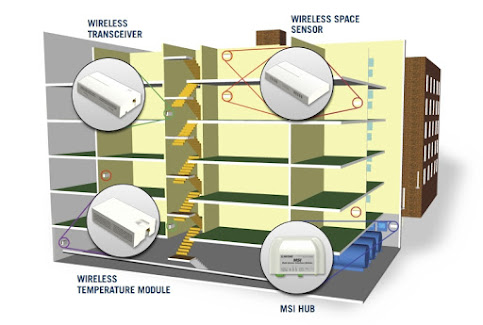
Some buildings are just hard to heat.  Every heating contractor has one or two hard to heat buildings. Big multi-use buildings like schools, churches and public buildings that have a tough combination of large spaces and small offices scattered throughout the building. Older buildings that may have had several renovations or additions over time.  Sometimes the building’s heating system was just poorly designed in the first place. However, the tenants don’t care about why the building is so hard to heat, they just want an apartment or office that is not so cold they need mittens or so hot that they need to keep the windows open in the winter. Building managers and owners want that too! An HVAC technician faced with an unbalanced, hard to heat building needs some powerful diagnostic tools to figure out what is wrong and how to fix it. Heat-Timer® wireless sensors can help diagnose those tough heating problems One of the primary tools are the wireless room sensors from Heat-Timer...